Designing a backyard pool is a task in balancing space and purpose. Whether you're planning a quiet place to unwind or an energetic space for kids and guests, the right pool size will reflect how you want to use it and how it fits into the overall layout of your outdoor living area.
Deckscapes of Virginia builds beautiful gunite pools as part of our epic backyard remodels throughout Loudoun, Fairfax, and Prince William Counties. Our approach to pool planning is intentional and informed by how our clients want to live. That starts with one simple but important question: How do you plan to use your pool? Your answer will shape everything from size and depth to layout and landscaping. Here’s how to think it through.
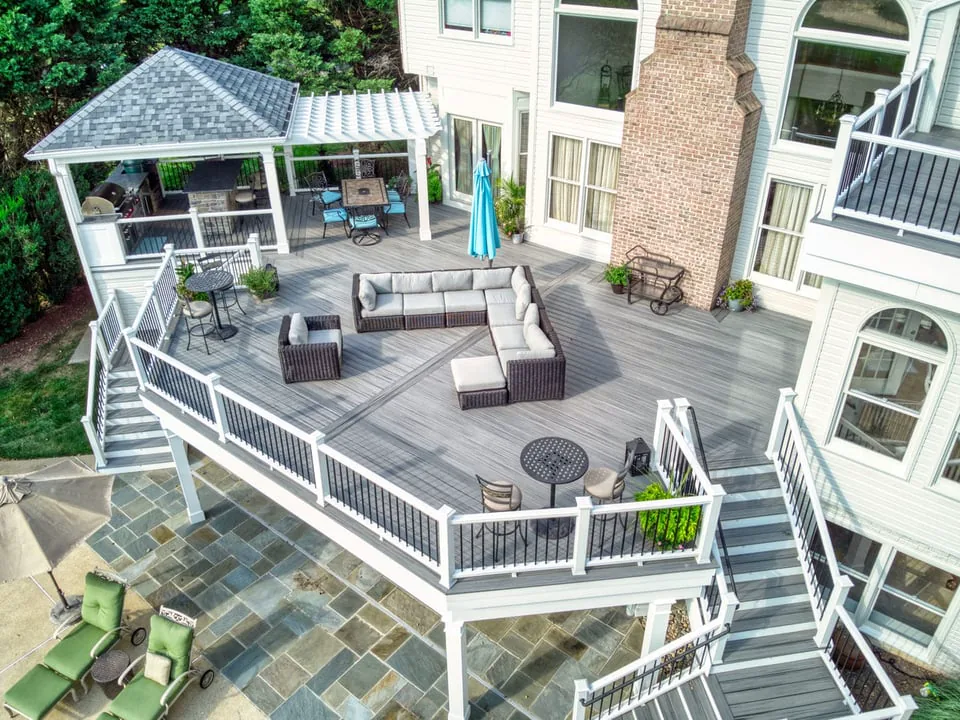
Every great deck design starts with a clear picture of how you plan to spend your time outside. Think in terms of activities first, layout second, size last. This ensures your finished deck works for the way you live, rather than forcing your lifestyle into a space that’s too tight or awkwardly arranged.
Once you define the activities, translate them into zones with ample space for the uses you've got in mind.
Don’t forget circulation. Even a deck with plenty of square footage can feel cramped if people are constantly navigating around furniture or through tight pinch points. Plan for at least 36 inches of walking space in traffic areas, and 42–48 inches where you expect frequent two-way movement or need accessibility.
A deck’s footprint isn’t the same as its usable space. The location of doors, stairs, and walkways can make a small deck feel bigger or a large one feel cramped, depending on how they’re positioned. Planning access points early helps you get the most from the square footage you’re paying for.
Where your deck connects to the house matters. A door that opens directly into a dining area can make serving food convenient, but it can also create a bottleneck if it swings into the traffic path or right into furniture. Keep at least 32 inches of clear width for your main egress door and position furniture so the opening area stays free.
Stairs take up more space than most homeowners realize. A straight-run stair with a 36-inch width and landing can eat several feet of deck length. Placing stairs near the door or tucked along the deck’s edge can preserve uninterrupted zones for dining or lounging. Poor stair placement in the middle of a main space can shrink a deck’s functional size by several feet in each direction.
Think of the deck as a set of zones with defined walking routes. Maintain:
While every deck is custom, these common sizes can help you visualize what works in real life, and you can explore even more possibilities by browsing our custom deck design gallery. Keep in mind that access points, railings, and clearance around furniture all affect usable space.
Curious about the cost of the outdoor living space you've got in mind?
Run your own numbers with our cost calculator here.
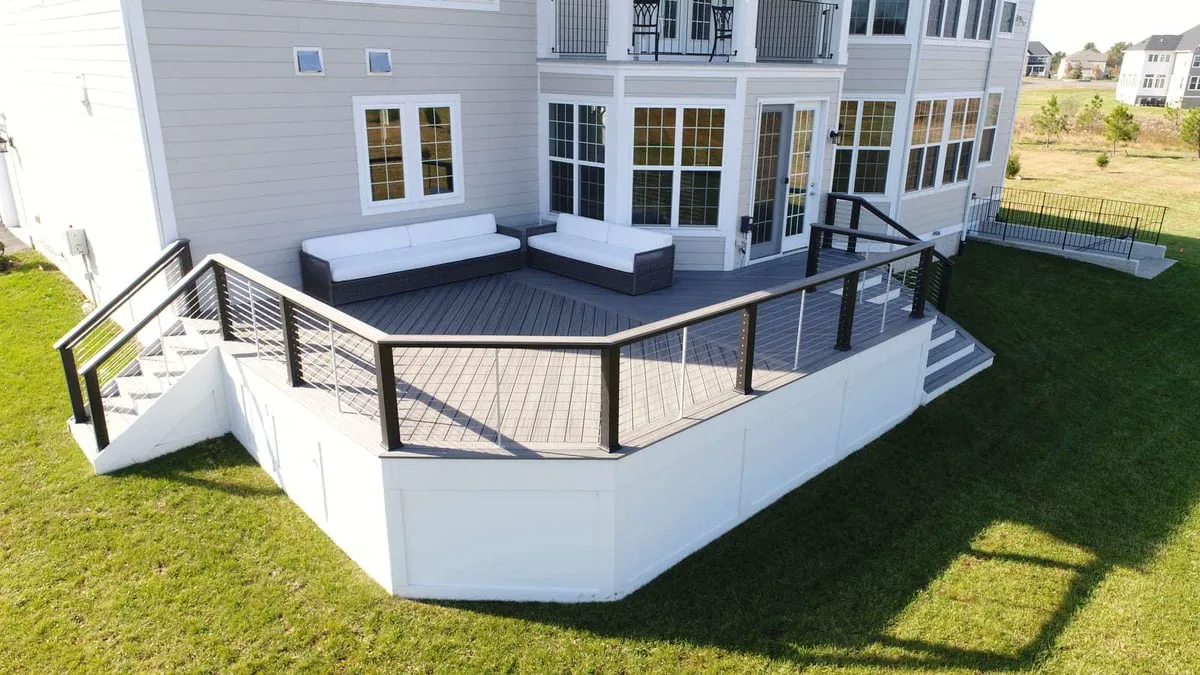
Multi-level decks are a smart solution for sloped yards, separating activities, or creating a more dynamic outdoor living space. They can make a large deck feel more organized and give each zone a clear purpose, while also allowing you more creativity in customizing an outdoor space that reflects your personal style.
Each level should have enough room for its intended use, plus circulation space:
Levels separated by one or two steps (about 7–15 inches) define spaces without the need for extra railings. Once a walking surface is 30 inches or more above grade, guardrails at least 36 inches high are required by code.
A well-proportioned deck feels like a natural extension of your home. Too small, and it can look like an afterthought. Too large, and it can overpower your house or overwhelm a small backyard.
A common starting point is to size a deck at no more than about 20% of your home’s total square footage, then adjust based on the architecture and how you plan to use the space. Consider how the deck aligns with windows, doors, and rooflines so it feels integrated with the home’s design.
Take into account:
Some Northern Virginia jurisdictions limit how much of your lot can be covered by structures, including decks.
Others may have stormwater management or drainage requirements that affect size and placement. Sloped lots, easements, and Chesapeake Bay Preservation Area buffers can also limit the available footprint.
The right deck size is shaped by local building codes, zoning rules, and HOA requirements. Understanding these early can save time, prevent costly redesigns, and avoid delays during permitting.
In Northern Virginia, most decks require both a building permit and zoning approval. A copy of your property’s plat or house location survey is typically required for the application. This document shows your property lines, easements, and any Chesapeake Bay Preservation Area buffers that could affect where your deck can be built.
Setback requirements, how far a structure must be from property lines, vary by county, zoning district, and even within neighborhoods. Because each site is unique, it’s important to verify your exact setbacks before finalizing the deck design.
In Fairfax and Prince William counties, RPAs impose a 100-foot buffer along perennial streams and other protected water features. Building in this area is heavily restricted and may require special review or exemption.
Many HOAs in our area have design guidelines to ensure new decks fit the style of the home and neighborhood. HOA approval is often required before applying for permits, so it’s best to submit design plans to the HOA early in the design process. Common rules include:
Your needs today might not be the same in five or ten years. Designing with the future in mind can save you from costly structural changes later, and many homeowners also explore other outdoor upgrades to complement their deck investment.
Hot tubs, outdoor kitchens, and masonry fire features can add significant weight, often more than standard deck framing can handle. If you think you might add one of these features later, it’s worth building the necessary support into the deck now.
Adding a covered roof or screened porch later is possible, but much easier if you install the right footings and framing from the start. Properly sized and placed footings can prevent the need to tear up portions of the deck to handle the extra load.Projects like this sun-soaked screened porch shows how planning ahead can make it simple to expand your outdoor space when the time feels right.
Even if you’re not adding lighting or heaters now, consider running conduit or installing junction boxes during construction. This makes it easier to add outlets, low-voltage lighting, or outdoor ceiling fans later without cutting into finished surfaces.
Composite continues to evolve, with options for better heat resistance, slip resistance, and scratch protection, reflecting many of the most popular deck trends and ideas for 2025 that homeowners are embracing. Choosing a system that works with multiple railing styles and accessories gives you flexibility for future updates.
Building codes influence how your deck is designed and may affect the final size or layout. While a professional builder will handle code compliance, understanding the basics can help you make informed decisions.
Most residential decks are built to support 40 pounds per square foot of live load plus 10 pounds per square foot of dead load. Heavy features or hot tubs require engineering for much higher loads.
Fire safety guidelines recommend keeping grills and other heat-producing appliances at least 10 feet away from combustible materials, including siding and railings. This clearance should be factored into the layout from the start.
The materials you choose play a major role in how your deck looks, feels, and performs over time. At Deckscapes of Virginia, we specialize in low-maintenance composite and PVC decking, not wood, because these materials hold up better in the region’s climate and require far less upkeep.
If your deck will be in full sun, lighter-colored boards and heat-mitigating products can make the surface more comfortable underfoot. Adding shade structures like pergolas, retractable awnings, or a roof can further reduce heat buildup and protect furniture.
Many HOAs require deck colors to coordinate with the home’s exterior trim or siding. Choosing a color palette that complements your house will help your deck look like a natural extension of your living space.
Your deck should be an effortless extension of your home and a space you love to use. Deckscapes of Virginia designs and builds custom, low-maintenance decks that fit your lifestyle, your property, and your future plans. We handle every detail so you can enjoy the process and the results. Whether you’re in Fairfax, Prince William, or Loudoun County, our team is ready to bring your ideal outdoor space to life.
Ready to explore your options? Contact us to schedule a consultation and take the first step toward your perfect backyard.